
There is magic on the roof of the Dragons
The Drakensberg stretches along South Africa’s eastern edge and rewards travellers who slow down and pay attention to weather, light, and time.

🔴 You might also like to read:
 Mariana Balt
The Drakensberg mountain range forms part of the great escarpment in southern Africa, extending roughly for about 1 000 kilometres from southwest to northeast.
The range's northern edge in the northeast in the Mpumalanga and Limpopo regions of South Africa forms successive borders between South African provinces and Lesotho, then curves down through the eastern border of Lesotho before terminating near the Eastern Cape.
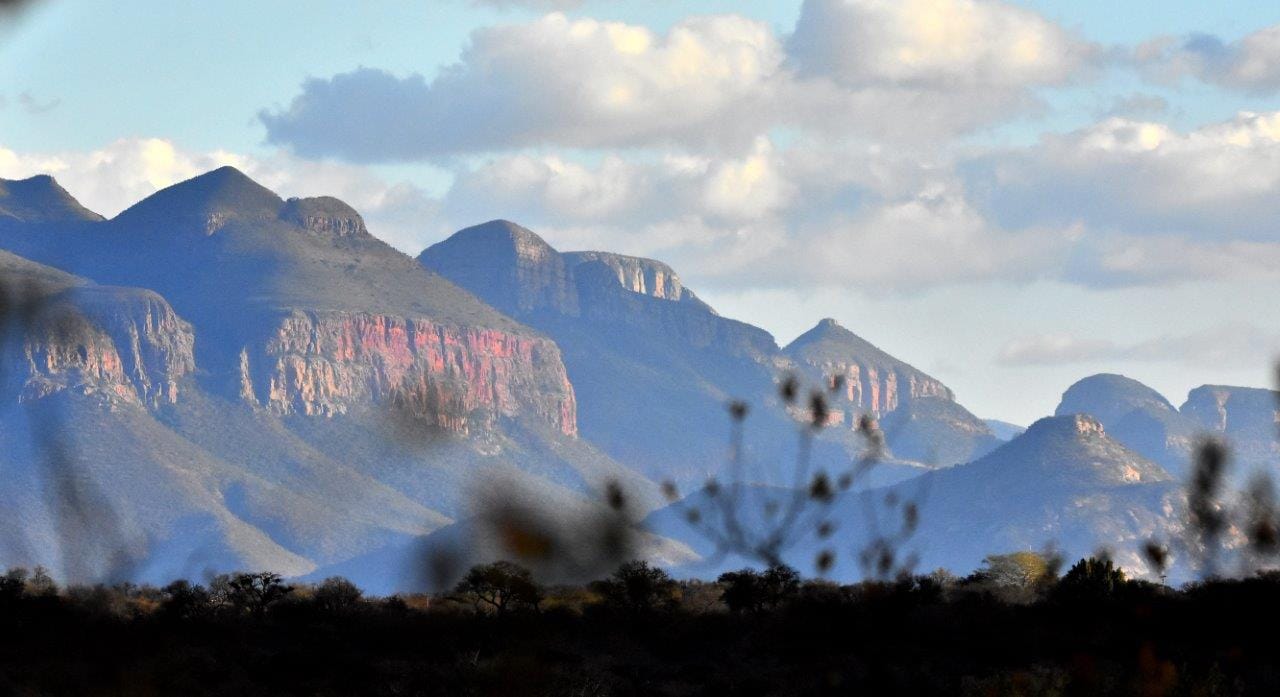
It forms a natural divide between the high central plateau of South Africa and the lower coastal plains and valleys, including much of KwaZulu-Natal’s hinterland.
The highest part of the Drakensberg lies along the border between Lesotho and South Africa, and national parks such as Royal Natal National Park, Giant’s Castle and the Cathedral Peak area are prominent sections of the Drakensberg within KwaZulu-Natal.
Often referred to simply as “The Berg”, the Drakensberg carries names that reflect both awe and practicality. The Afrikaans name translates as Dragon Mountains, while the isiZulu name uKhahlamba means barrier of spears. Neither feels exaggerated.
The range reveals itself gradually as you travel inland from the N3, turning off near Harrismith, Bergville, or Winterton. Grasslands begin to rise and fold, sandstone cliffs appear in layers, and the air sharpens as altitude increases.
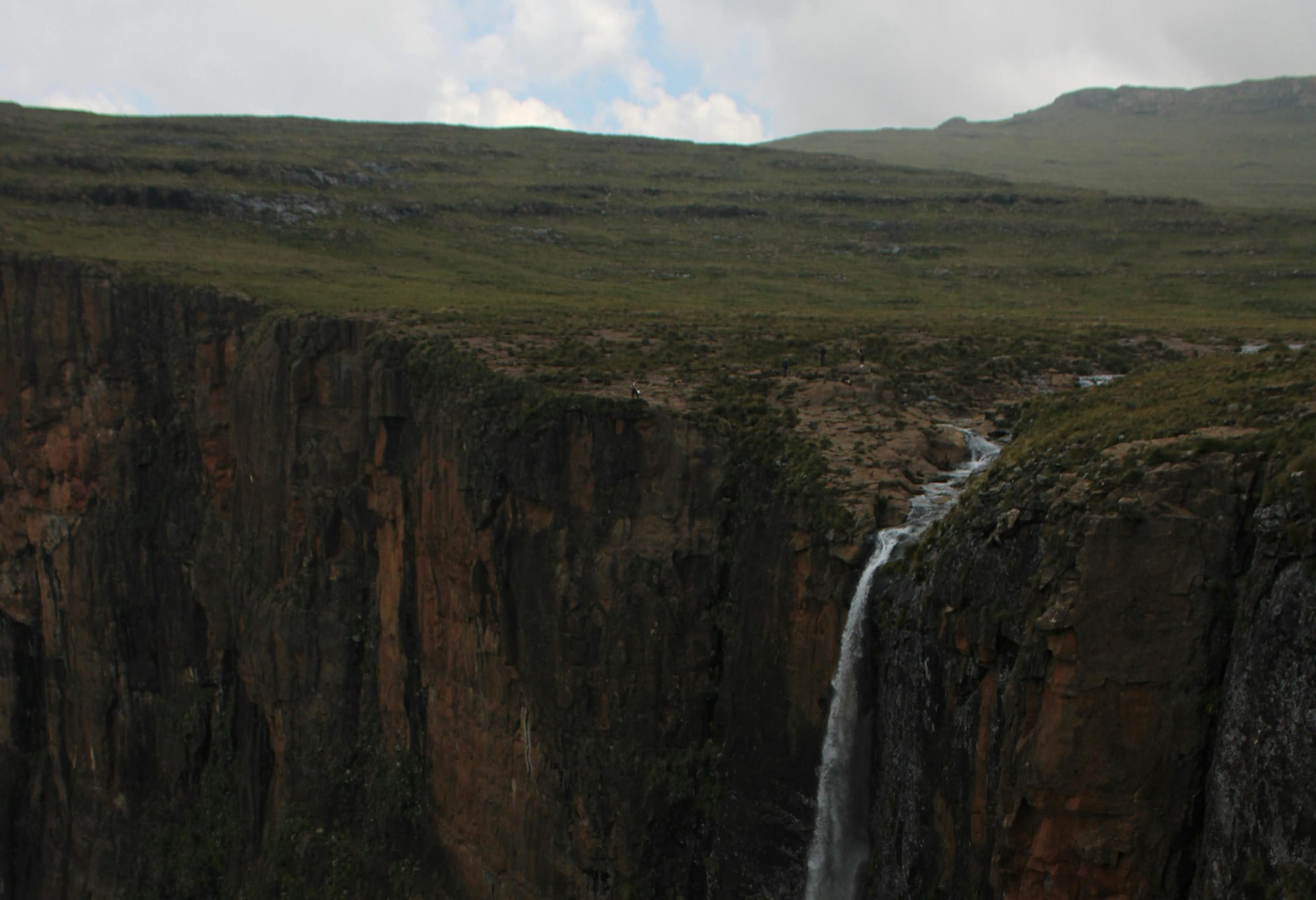
The Royal Natal National Park sits beneath one of the most imposing cliff faces in the world. The Amphitheatre stretches for kilometres, its sheer walls rising over 1,000 metres from the valley floor. The Tugela Falls plunge from the escarpment above, fed by summer rainfall and snowmelt, and are at their most impressive after heavy rain.
The approach road into the park is short but memorable, framed by indigenous forest and open grassland, with the Sentinel standing as a lone marker against the sky. The Tugela Gorge trail follows the river upstream and offers a measured introduction to the scale and mood of the mountains.
Further south, the central Drakensberg opens into a sequence of valleys, peaks, and protected areas that include Cathedral Peak, Monk’s Cowl, Champagne Castle, and Giant’s Castle. The R600 from Winterton winds past farm stalls, lodges, and trailheads, climbing steadily towards the escarpment. At Monk’s Cowl, well-maintained paths move through indigenous forest and high-altitude grassland, catering to both casual walkers and experienced hikers.
Giant’s Castle, broader and more open in character, is known for its wildlife and its exceptional collection of San rock art. Sheltered beneath sandstone overhangs, these paintings provide a rare and intimate record of spiritual belief and daily life that stretches back thousands of years.
The escarpment itself forms the international border with Lesotho and reaches its highest point at Mafadi, standing at 3,450 metres. From the plateau above, the landscape feels stripped back and elemental. Water seeps from the high ground, feeding river systems that support much of southern Africa, including the Tugela and the Orange rivers.
Weather patterns shift quickly at this altitude. Clear mornings can give way to clouds and afternoon storms, particularly in summer, and winter brings snow and biting winds. These conditions shape both the ecology of the region and the rhythms of those who travel through it.
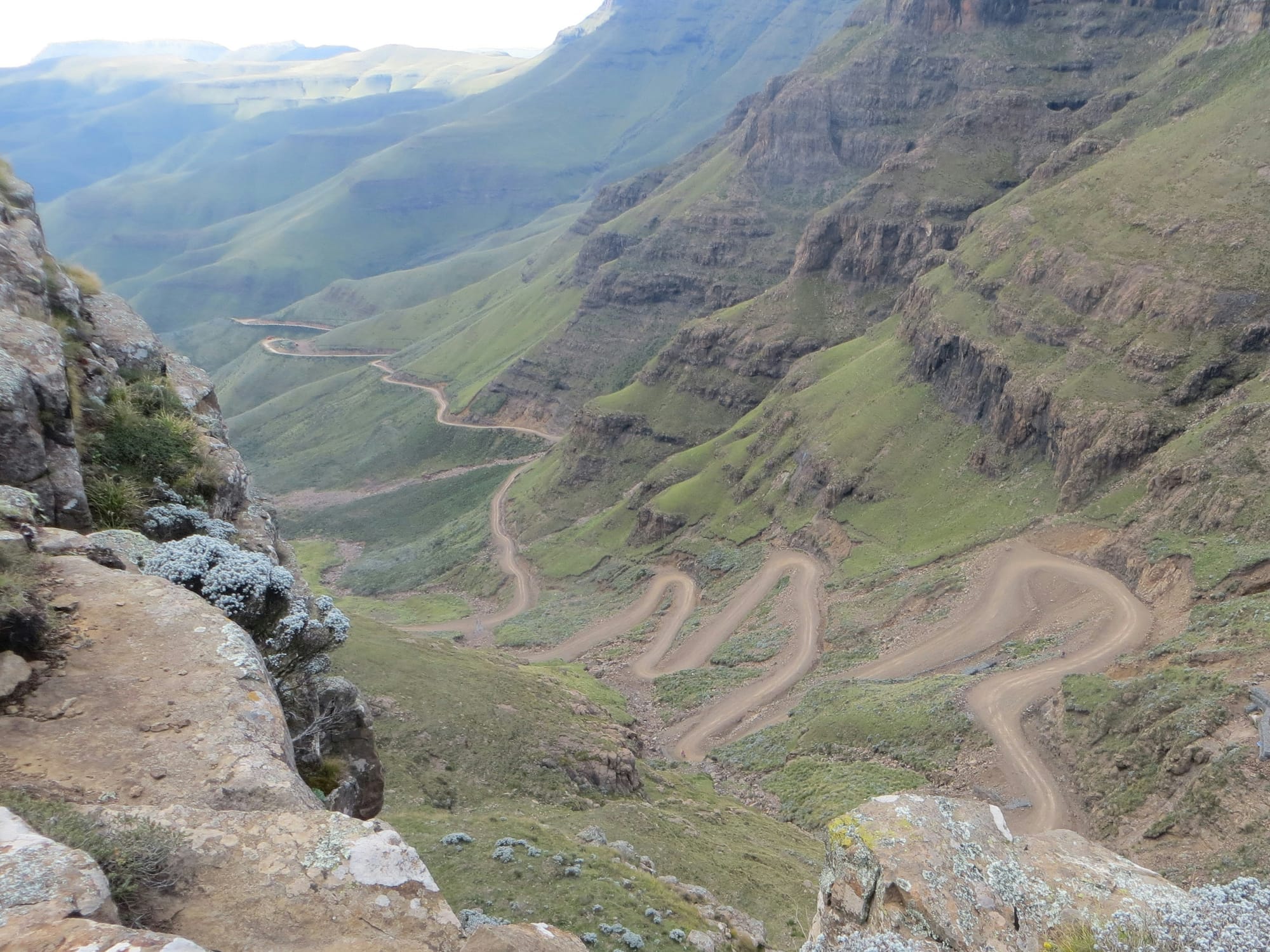
The southern Drakensberg carries a quieter, more spacious character. Areas such as Kamberg and Loteni are favoured for their solitude, wide valleys, and sense of distance from main routes. Near Underberg and Himeville, the land opens towards the Sanqebethu range and the base of Sani Pass. This steep gravel road climbs from KwaZulu-Natal into Lesotho, rising from roughly 1,500 metres to over 2,800 metres in under nine kilometres. It is one of the highest mountain passes in southern Africa and requires a suitable vehicle and careful attention to conditions, particularly in winter when ice and snow are common.
Life in the Drakensberg unfolds at a slower pace. Mornings often begin with mist lifting from the valleys, revealing layered ridgelines and distant peaks. Evenings settle quickly as cold air moves downslope and the light fades behind the escarpment.
Accommodation ranges from self-catering chalets in nature reserves to long-established hotels and family-run lodges, many built from local stone and positioned to capture expansive views. Meals are unhurried, conversations often revolve around weather and walking routes, and the mountains quietly set the tone.
The appeal of the Drakensberg lies not in spectacle alone, but in familiarity gained over time. The mountains reward return visits, different seasons, and unplanned pauses. Winter brings clarity and sharp outlines, summer fills the valleys with green and thunderclouds, and the shoulder seasons offer calm and space. Each visit reveals something slightly altered by light, weather, or perspective.
To travel through the Drakensberg is to understand how geography shapes movement, culture, and memory. These mountains have long served as refuge, boundary, and source of water and meaning. Standing on a ridge above the Little Berg, looking towards the escarpment, it becomes clear why this range is known as the roof of South Africa. Not because it dominates the land aggressively, but because so much of the country’s natural rhythm begins here.
🔴 You might also like to read:
 Mariana Balt
Comments ()