
Royalty where least expected: Prince Albert, a Karoo masterpiece
Prince Albert, framed by the Swartberg Mountains and the wide Karoo plains, blends heritage architecture, mountain passes and ethical country living.
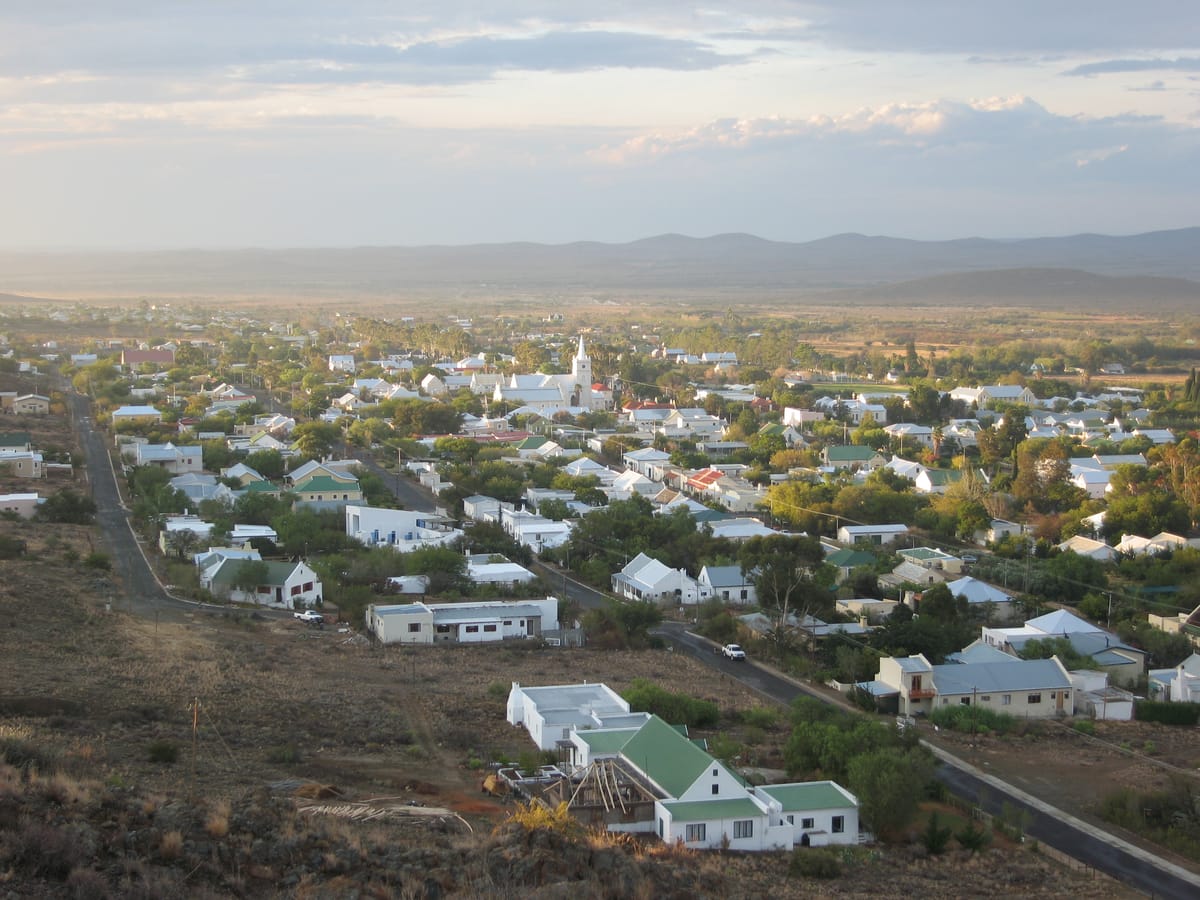

Prince Albert rests at the southern foot of the Swartberg Mountains, 420 kilometres from Cape Town along the N1 and R407, and roughly 220 kilometres from George via the N12 over the Outeniqua Pass. The journey itself prepares you for arrival. Wheat fields give way to scrub, the air dries, and the horizon widens until the Karoo reveals its measured grandeur.
Founded in 1762 and named after Queen Victoria’s consort, the town developed as a farming community sustained by water channels known locally as leivore. These furrows still run along the streets, guiding snowmelt from the Swartberg peaks into gardens shaded by pomegranate and fig trees. Whitewashed Cape Dutch and Karoo-style houses line Church Street and Market Street, many carefully restored. More than a hundred buildings are protected as national monuments, making Prince Albert one of South Africa’s most architecturally intact rural towns.
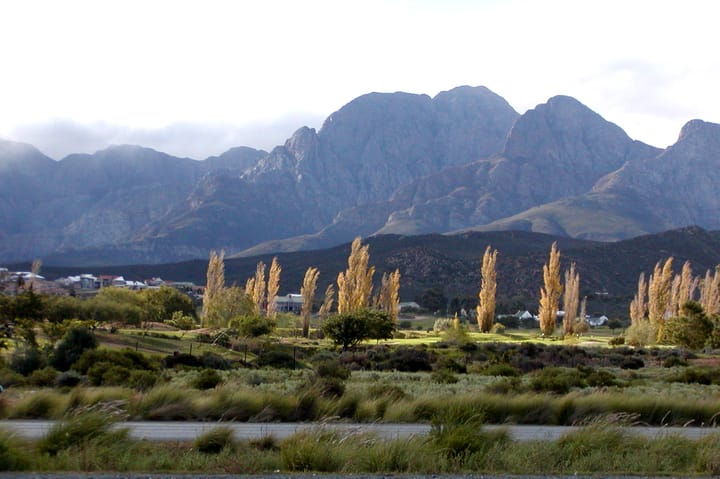
Geographically, the town lies between the Swartberg range to the north and the arid plains stretching towards the Great Karoo to the south. This position gives it a distinctive climate. Summers are hot and dry, and winters are crisp with occasional snow on the mountains. The light changes quickly, especially at dusk when the Swartberg turns from slate to rose.
The Swartberg Pass, completed in 1888 by engineer Thomas Bain, begins just outside town. This 27-kilometre gravel route climbs to 1 583 metres above sea level, linking Prince Albert with Oudtshoorn in the Klein Karoo. Hairpin bends and dry stone retaining walls testify to nineteenth century craftsmanship.
Travellers who drive or cycle the pass experience shifting geology, from sandstone to quartzite, and expansive views across folded ridges. Responsible travel practices matter here. Vehicles should remain on designated roads, and hikers must respect fragile mountain flora.
Back in town, the Fransie Pienaar Museum offers context through exhibits on local farming, Anglo-Boer War history and domestic life. Olive farms and small vineyards dot the outskirts, benefiting from fertile soils and careful irrigation. Tasting rooms emphasise small batch production, and many producers follow organic principles suited to the semi-arid environment.
Dining in Prince Albert reflects the rhythm of the land. Lamb from surrounding farms appears frequently on menus, often slow-roasted and paired with seasonal vegetables. Karoo lamb holds geographical indicator status in South Africa, protecting both provenance and farming standards. Visitors are encouraged to support eateries that source locally and reduce food miles.
Accommodation ranges from restored Victorian houses to contemporary guest lodges with shaded courtyards. Many establishments use solar power and water-wise gardens, a practical response to drought cycles that have affected the Western Cape in recent years. Tourism here tends to be small-scale and community-driven, reinforcing the town’s unhurried character.
Prince Albert also rewards those who walk. A self-guided heritage trail passes the Dutch Reformed Church, built in 1862, and modest cottages once occupied by artisans and labourers. Early morning reveals the quietest side of town. Donkeys bray in distant fields. The Swartberg stands firm against a pale sky.
Beyond its aesthetic appeal, Prince Albert represents resilience. Farmers have adapted to scarce rainfall for generations. Residents balance preservation with contemporary life, welcoming travellers without surrendering identity. Ethical travel plays a central role in sustaining this balance. Choosing locally owned accommodation, conserving water, and respecting cultural heritage ensures that the town remains authentic rather than ornamental.
Prince Albert’s strength lies in proportion and patience. Mountains frame it, history steadies it, and the Karoo stretches beyond it in silent affirmation. Travellers who arrive expecting grandeur often leave speaking of subtler rewards, the sound of wind through poplars, the clarity of stars unspoiled by city glare, and the feeling of time recalibrated to a gentler pace.
The Karoo has many settlements, yet few display such cohesion between landscape and architecture. Prince Albert stands as a measured composition of stone, water and sky, a royal masterpiece shaped not by extravagance, but by endurance.


Comments ()