
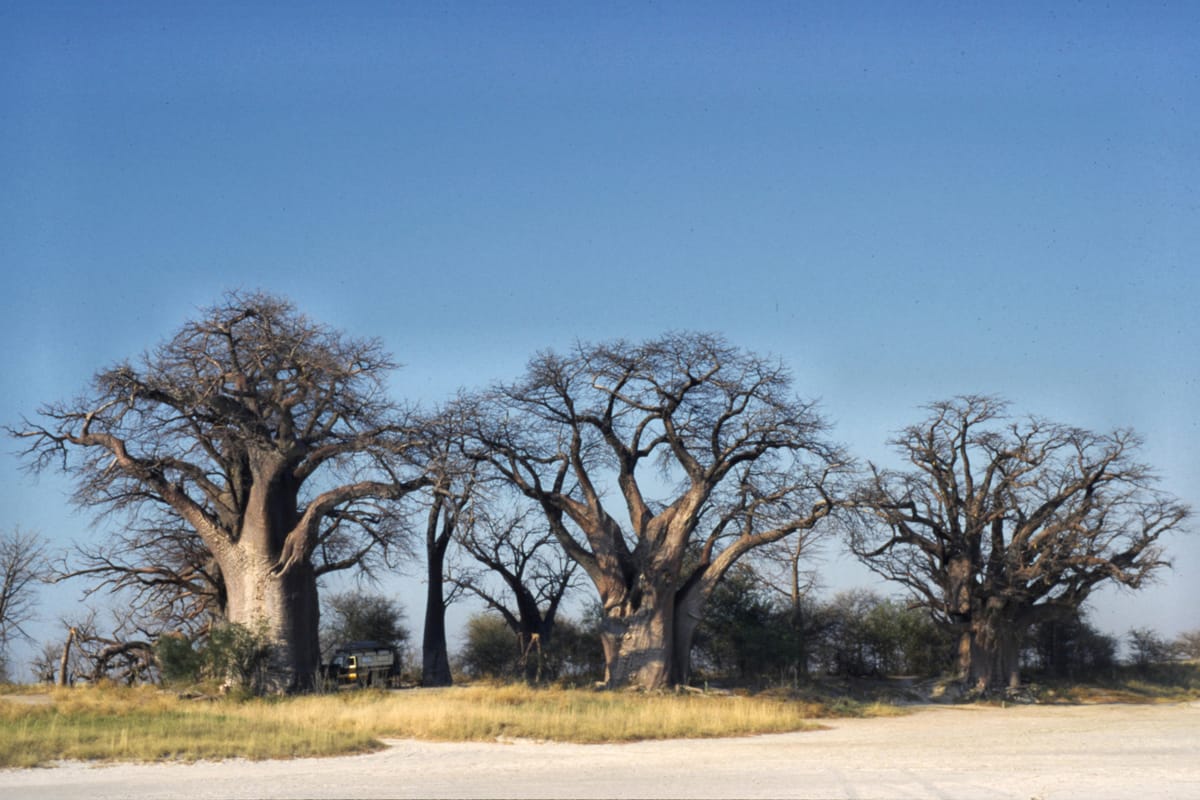
Nxai Pan National Park in Botswana's beauty lies in transformation, timing and the iconic Baines’ Baobabs.


Nxai Pan National Park lies along Botswana's A3 route between Maun and Nata, forming part of the wider Makgadikgadi Pans ecosystem. On a map, it appears as a pale, almost featureless stretch of northern Botswana. On the ground, however, the landscape changes dramatically with the seasons.
The first impression is always the same. Vast salt pans stretch towards the horizon in a white, sun-bleached sheet, broken only by the faint outline of grassland and distant acacia trees. The openness is striking and, during the dry months, heat shimmers above the pans while dust drifts across the plains. Wildlife becomes more scattered, leaving behind a landscape where the sheer scale of the salt pans is every bit as memorable as the animals themselves.
 Mariana Balt
Everything changes with the arrival of the rains, usually between November and March. Although the water does not remain for long, it is enough to transform the landscape. Fresh grass spreads quickly across the pans, attracting large herds of zebra, wildebeest and springbok as they follow ancient migration routes shaped by rainfall rather than national borders. Lions and hyenas soon follow, drawn by the sudden abundance of prey.
One of the park's best-known landmarks is Baines' Baobabs near Kudiakam Pan. These ancient trees have stood here for centuries, their massive trunks shaped by wind, drought and time. In 1862, explorer and artist Thomas Baines painted them, and visitors today can still recognise the scene he captured more than 160 years ago.
Most travellers reach Nxai Pan from Maun, about 200 kilometres away, or from Nata while exploring northern Botswana. Although the park is easily accessible from the A3, it rarely feels crowded. Many visitors include it as part of longer journeys to the Okavango Delta or Chobe National Park. During the wet season, migratory birds arrive in large numbers, while shallow pools attract flamingos and other waterbirds when conditions allow.
 Mariana Balt
Accommodation inside the park remains simple. Campsites are basic, and visitors need to be self-sufficient by bringing enough water, fuel and supplies. That sense of remoteness is part of the experience and one of the reasons many travellers return.
The dramatic contrast between the dry and wet seasons is what sets Nxai Pan apart. Ground that appears almost empty for much of the year can support thousands of grazing animals within weeks after good rains, making it one of Botswana's most remarkable seasonal landscapes.
 Lynette Spencer
 Naomi Roebert
 Liz Thorne
 Anchen Coetzee

Comments ()