
Driving in dense fog
Fog can turn a scenic South African drive into a demanding test of skill and awareness. Learn how to adjust speed, lighting, and decision-making to stay safe while travelling through mist-prone regions.
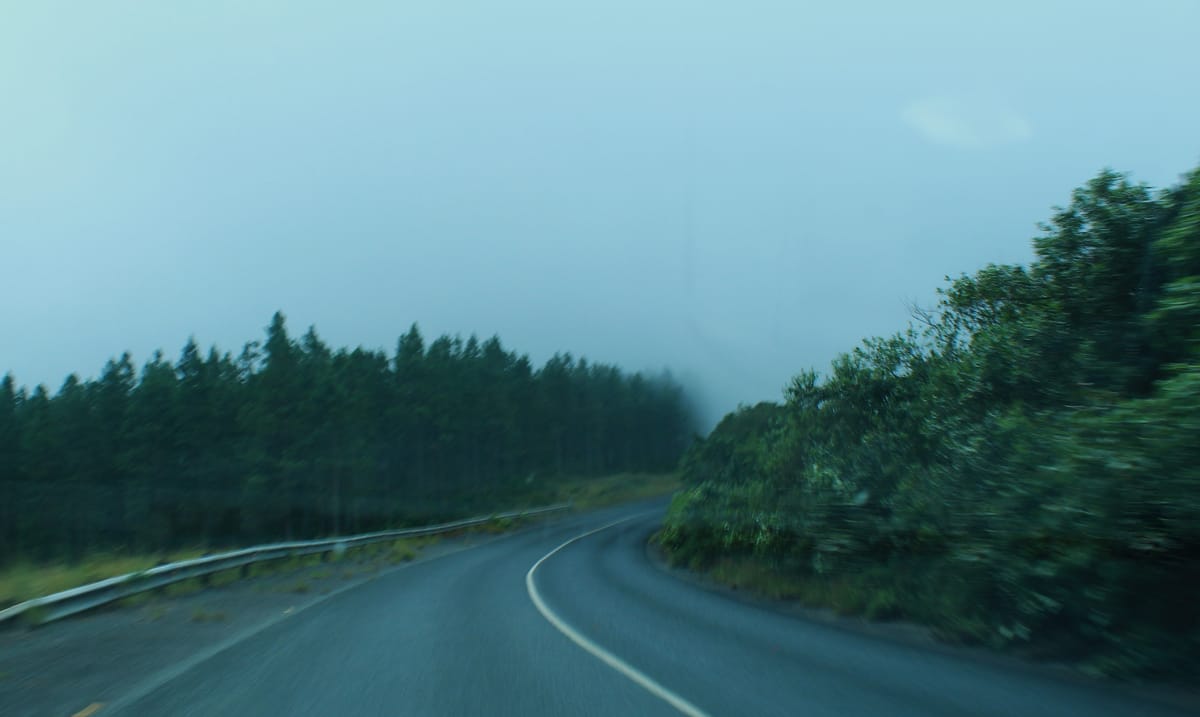
Morning fog on South African roads has a way of turning familiar landscapes into uncertain corridors. One moment, the horizon stretches wide across sugarcane fields or Highveld grassland. Next, the world narrows to a pale, shifting wall just beyond the bonnet.
For travellers exploring KwaZulu-Natal’s misty Midlands or climbing towards Mpumalanga’s escarpment towns, fog is not merely a scenic feature. It becomes a test of patience, judgment, and respect for the road.
Fog forms when warm, moisture-laden air cools rapidly near the ground. Coastal humidity drifting inland overnight often meets colder surfaces along elevated routes such as the N3 near Van Reenen’s Pass.
In winter, radiation fog frequently settles across valleys around Nottingham Road or Underberg. Visibility can drop from several kilometres to a few metres within minutes.
Understanding how quickly conditions can change is the first step towards safer travel.
Speed management sits at the heart of navigating dense fog. Reducing speed is not a sign of nervous driving. It is a practical response to a shorter reaction window. Drivers sometimes underestimate how far they travel, even at moderate speeds.
At 80 km/h, a vehicle covers more than 20 metres every second. When visibility shrinks to 30 metres, braking decisions must be immediate and precise. Smooth inputs on the pedals and steering wheel help maintain control on damp surfaces where traction may be reduced.
Lighting choices also play a critical role. Many motorists instinctively switch on high beams, hoping to cut through the haze. The opposite happens. Bright light reflects off suspended water droplets, creating a dazzling white curtain.
Low beams or dedicated fog lights project downwards, illuminating road markings and verge edges more effectively. In regions where livestock or wildlife wander onto rural routes, such as the R617 between Bulwer and Kokstad, clear ground-level visibility becomes invaluable.
Your following distance deserves renewed attention in fog. Tail lights ahead may seem reassuring, yet they can also encourage drivers to travel too closely. Maintaining a generous gap allows time to react if the vehicle in front slows suddenly or swerves to avoid debris.
Heavy vehicles climbing gradients often move slowly and may be partially obscured. Overtaking without full visibility is a gamble rarely worth taking, particularly on single-carriageway roads threading through rolling terrain.
Stopping safely during severe fog requires careful thought.
Pulling onto a narrow shoulder can expose a stationary car to oncoming traffic. Service stations, farm entrances, or well-marked lay-bys provide better refuge.
Hazard lights should be used sparingly while moving, as they can confuse other drivers about intentions. Once stationary, they become an essential signal of presence.
Modern navigation apps provide real-time updates, yet local knowledge still matters. Residents along mist-prone routes understand seasonal patterns and microclimates. Conversations at roadside cafés often yield practical insights about which passes are clear or where fog tends to linger longest.
Travellers who remain flexible with departure times frequently enjoy calmer journeys and safer conditions.
Fog has a quiet beauty. Hills dissolve into soft silhouettes, and the landscape takes on a contemplative mood. Treating these moments with respect transforms them from stressful obstacles into memorable travel experiences. The road remains the same. Our approach to it makes all the difference.

Comments ()