
Does Kimberley offer more than the Big Hole?
Kimberley offers far more than the Big Hole - from diamond history and wartime heritage to nearby wildlife reserves.
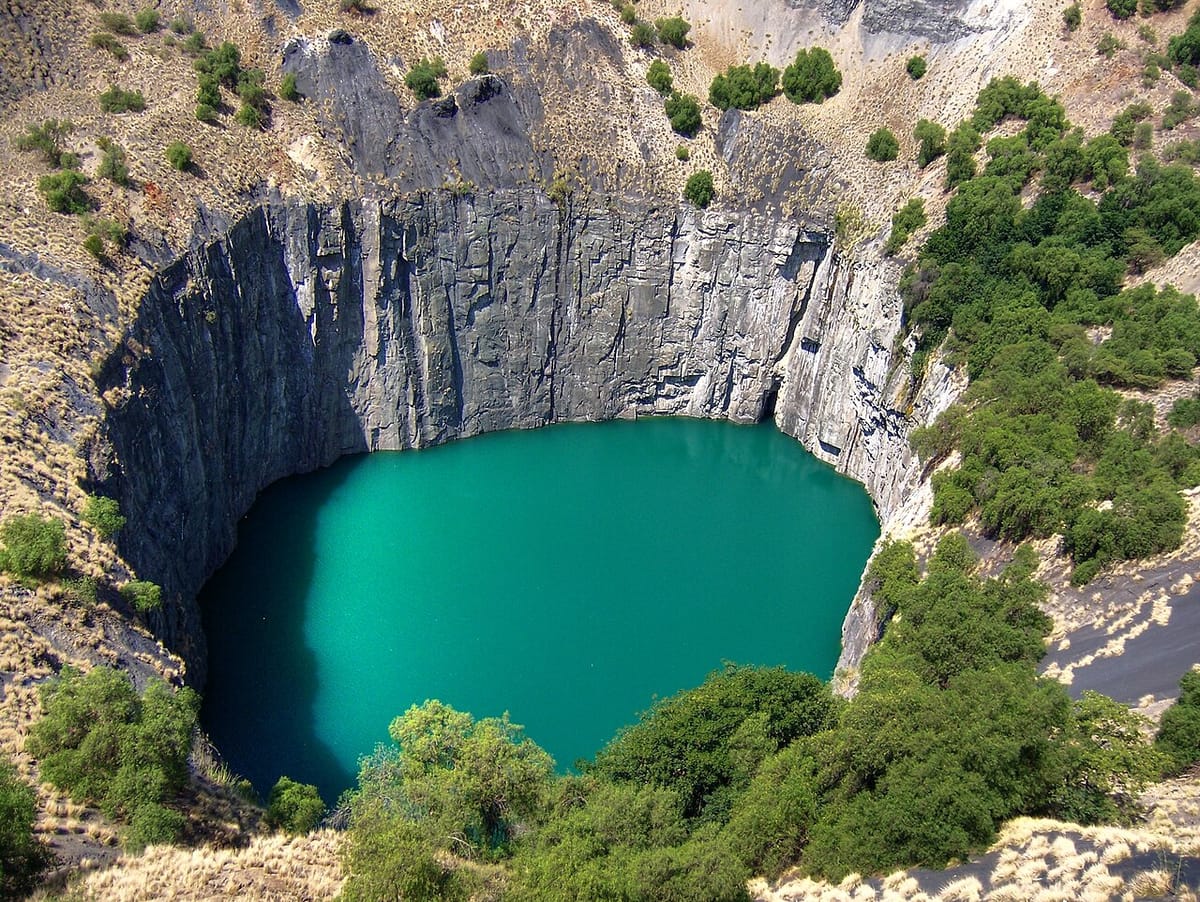
Kimberley is often introduced through a single image, the vast circular pit known as the Big Hole. Travellers arrive via the N12 or N8, pause briefly at the viewing platform, then continue towards Cape Town, Johannesburg or the Kalahari.
The assumption is that the city exists mainly as a mining relic. The latter impression misses a much broader story.
The Big Hole itself remains one of the largest hand-dug excavations in the world. It was created during the diamond rush of the late nineteenth century, when prospectors converged on the area after discoveries near the present-day Northern Cape. The scale is still difficult to grasp from ground level. The water-filled crater sits within a city that once drew fortune seekers from across the globe.
Kimberley’s deeper character becomes clearer at the Kimberley Mine Museum.
The open-air setting recreates sections of the original mining settlement, including corrugated iron buildings and reconstructed streets that reflect daily life during the diamond boom. The site explains how rapidly Kimberley transformed from a sparse Karoo landscape into a global centre of mining activity.
The city also holds strong historical weight beyond diamonds. During the Anglo-Boer War, Kimberley endured a prolonged siege. The McGregor Museum, located partly in the historic Sanatorium building, documents this period alongside broader regional history. Exhibits cover archaeology, early settlement patterns and cultural development across the Northern Cape.
Architecture offers another layer of interest. Some suburbs still contain Victorian and Edwardian homes built during periods of mining wealth. Wide verandas, ornate ironwork and sandstone detailing reflect a time when Kimberley was one of the richest cities in the Southern Hemisphere.
Geography shapes the experience as well. The city lies in open semi-arid terrain where skies feel expansive and light shifts dramatically throughout the day. Summer storms build over the horizon, while winter brings sharp clarity and cool mornings.
Kimberley also functions as a practical travel junction. The N12 links Johannesburg to Cape Town, while the N8 connects towards Bloemfontein and the eastern Free State. This positioning has made the city a long-standing stopover for road travellers.
Nearby Mokala National Park, located roughly 70 kilometres south-west of Kimberley, adds a strong wildlife dimension. The park protects species such as roan antelope, sable and black rhino in a quieter, less crowded setting than many better-known reserves.
Food culture reflects Kimberley’s role as a crossroads. Long-distance travellers pass through regularly, supporting steakhouses, cafés and family-run restaurants that have served road users for decades.
Kimberley’s value lies in its layered identity. Mining history, war heritage, architecture and surrounding wilderness combine to create a city that rewards time rather than quick stops.


Comments ()