
Discover the novel side of Golden Gate Highlands National Park
Golden Gate Highlands National Park offers a quiet, richly textured escape in the Free State highlands.
🔴Have you read these articles yet?
 Mariana Balt
 Mariana Balt
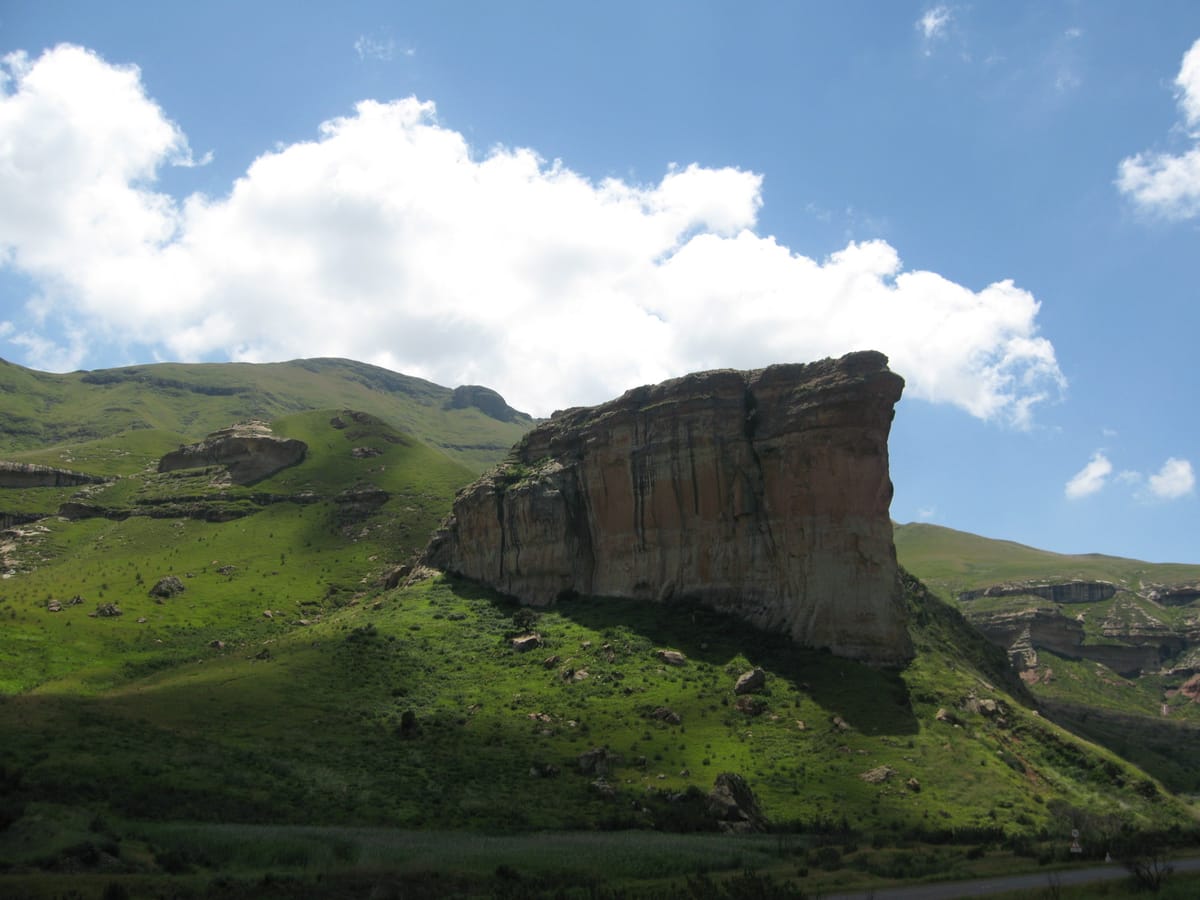
Some landscapes feel like settings from a well-worn classic, where light and stone shape a narrative of their own. Golden Gate Highlands National Park, in the north-eastern Free State near the Lesotho border, offers precisely that sensation. It is less than 320 kilometres from Johannesburg via the N3 and R712, yet it feels worlds away from urban rush. Here, sandstone cliffs glow amber at sunrise and deepen to burnt orange by late afternoon, giving the park its evocative name.
Approaching from Clarens along the R712, the road curves gently between grasslands and sculpted rock formations. The Maluti Mountains rise to the east, marking the boundary with Lesotho. The park itself covers just over 340 square kilometres, a compact reserve by South African standards, yet rich in geological drama. The Brandwag Buttress stands as one of its most recognisable formations, a towering sandstone sentinel that has drawn artists and photographers for decades.
The appeal of Golden Gate lies not in vast predator sightings, but in atmosphere and texture. Herds of blesbok and black wildebeest graze across open plains. Eland move quietly between ridges. Bearded vultures, rare and protected, occasionally glide overhead. Birdlife exceeds 100 recorded species, making the park a rewarding stop for keen observers. It is a place where patience replaces spectacle, and where the rhythm of walking becomes the central experience.
Walking trails form the heart of any visit. The Echo Ravine Trail, a moderate 2-kilometre route near Glen Reenen Rest Camp, winds through narrow sandstone passages where sound carries curiously along the rock walls. The Wodehouse Peak hike, more demanding at roughly 5 kilometres return, rewards effort with sweeping views across rolling highlands. Proper footwear and weather awareness are essential. Afternoon storms can gather swiftly in summer, while winter mornings often begin with frost.
Accommodation ranges from well-appointed chalets at Glen Reenen to more secluded units at Highlands Mountain Retreat, which lies about 15 kilometres from the main camp along a gravel road. Self-catering facilities allow visitors to prepare simple meals while watching light shift across the surrounding hills. Responsible travel here means mindful water use and careful waste management. The park forms part of the Maloti Drakensberg Transfrontier Conservation Area, a significant cross-border initiative aimed at preserving biodiversity and cultural heritage.
History lingers quietly within these valleys. San rock art sites in the broader region speak of communities that once lived among these cliffs. Guided visits in nearby areas, conducted by knowledgeable local custodians, provide context without disturbing fragile sites. Respect for cultural heritage is as vital as the protection of wildlife.
Golden Gate also serves as a gateway to neighbouring attractions. Clarens, just 20 kilometres west, offers galleries and cafés that support local artisans. The Basotho Cultural Village within the park provides insight into the traditions of the Basotho people through reconstructed homesteads and guided interpretation. Engaging with these initiatives strengthens community economies and deepens understanding of place.
Season shapes the experience. Summer brings green grasslands dotted with wildflowers. Winter transforms the park into a palette of gold and pale blue, with occasional snowfall dusting the higher peaks. Photographers often favour the colder months for the clarity of light. Travellers should plan accordingly, as temperatures can drop below freezing overnight between June and August.
Driving routes within the park are accessible to standard vehicles, though caution is advised on gravel sections. Distances are modest. A leisurely circuit from the main gate to the highest viewpoint along the R712 takes less than an hour without stops. The reward lies in pulling over, stepping out, and allowing the landscape to reveal itself slowly.
Golden Gate Highlands National Park does not compete with larger reserves for dramatic wildlife encounters. Its strength is subtler. It offers space to reflect, to walk, and to observe how light reshapes stone throughout the day. For travellers seeking a quieter chapter in their Southern African journey, it provides a setting that feels almost literary in tone.
The novel experience promised here is not about plot twists. It is about atmosphere, heritage, and conservation woven together. In a country renowned for scale and spectacle, Golden Gate reminds us that intimacy with landscape can be equally compelling.
🔴 You might also like to read:
 Mariana Balt
 Mariana Balt
Comments ()